If you’ve been researching laser skin resurfacing, chances are you’ve come across two big names: Fraxel and CO2 laser. Both are well-established laser treatments used for improving skin texture, tone, and the appearance of ageing — but they work differently, suit different skin concerns, and come with very different recovery expectations.
At Cutis Clinic Brisbane, we offer both treatments and believe the best results start with the right choice. This guide breaks down everything you need to know about Fraxel vs CO2 laser so you can walk into your consultation informed and confident.
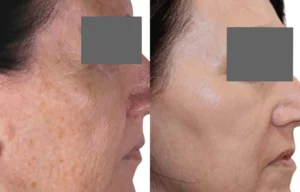
HD Fraxel Before & After
What Is Fraxel Laser?
Fraxel is a fractional non-ablative laser treatment. “Fractional” means it targets thousands of microscopic columns of skin tissue while leaving the surrounding skin intact. This controlled damage triggers the body’s natural healing response — stimulating new collagen production and cell turnover without removing the entire top layer of skin.
Because Fraxel preserves most of the surrounding tissue, recovery is relatively manageable compared to more aggressive resurfacing options.
What Fraxel Treats
- Fine lines and early wrinkles
- Sun damage and uneven pigmentation
- Acne scars (mild to moderate)
- Melasma and age spots
- Rough skin texture
- Enlarged pores
Fraxel: What to Expect
A Fraxel session typically takes 20–45 minutes. Most patients need a series of 3–5 treatments spaced 4–6 weeks apart for optimal results. Downtime is usually 3–5 days of redness, swelling, and a sandpaper-like skin texture (called “bronzing”) as the treated columns shed.
Results build gradually and continue to improve over several months as collagen remodels beneath the surface.
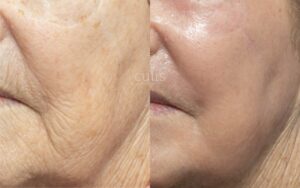
CO2 laser, fully ablative 2 passes with fraction as the third pass. Recovery 10+ day for re-epthelization, redness for >3 months
What Is CO2 Laser Resurfacing?
CO2 (carbon dioxide) laser is an ablative fractional laser — meaning it removes the outermost layers of skin entirely in the treated zones. This is a more intensive form of resurfacing that may deliver more significant improvement in fewer sessions, depending on the individual.
Modern fractional CO2 lasers (like the ones used at Cutis Clinic Brisbane) are a significant advancement over older, fully ablative CO2 treatments. By delivering energy in a fractional pattern, we can achieve powerful results while significantly reducing risk and recovery time compared to traditional full-face ablative resurfacing.
What CO2 Laser Treats
- Moderate to deep wrinkles
- Significant sun damage and skin laxity
- Deep acne scarring
- Uneven skin tone and texture
- Enlarged pores
- Benign skin lesions
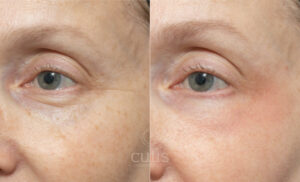
CO2 Laser Resurfacing
CO2 Laser: What to Expect
A single CO2 laser session may deliver results comparable to multiple Fraxel sessions, though this varies between individuals. Downtime is more significant — typically 7–14 days of redness, peeling, and sensitivity. Most patients require 1–2 treatments to work towards their desired outcome.
Post-treatment skin can remain pink for several weeks. Results and recovery experience vary from person to person.
Fraxel vs CO2: A Side-by-Side Comparison
| Feature | Fraxel | CO2 Laser |
|---|---|---|
| Type | Non-ablative fractional | Ablative fractional |
| Downtime | 3–5 days | 7–14 days |
| Sessions needed | 3–5 | 1–2 |
| Pain level | Mild to moderate | Moderate to significant |
| Results | Gradual, progressive improvement | More significant improvement, fewer sessions |
| Best for | Mild–moderate concerns, maintenance | Moderate–severe concerns, one-time transformation |
| Skin tone suitability | Broader range of skin tones | Best for lighter skin tones |
| Collagen stimulation | Yes | Yes (more aggressive) |
| Cost per session | Lower | Higher |

Fraxel Laser
Can Fraxel and CO2 Be Combined in One Session?
They can, and in the right patient it often makes a lot of sense. Rather than choosing one laser and accepting its limitations, a combined session lets us use each technology where it tends to perform best.
At Cutis Clinic Brisbane, one approach we use involves fully ablative CO2 passes over the areas that need the most work. Think etched smoker’s lines around the mouth, decades of Queensland sun on the cheeks, or deep rolling acne scars. A fractional pass then follows over the surrounding skin, which helps blend the treated zones into the rest of the face and encourages collagen production across a wider area. Sometimes we flip the logic: Fraxel across the whole face for general texture and tone, with CO2 reserved just for the stubborn spots around the eyes or mouth where fine lines tend to sit deeper.
Why combine them?
- You get intensity where the skin actually needs it, and a gentler touch everywhere else
- Blending between treated and untreated areas is smoother, so you’re less likely to see obvious lines of demarcation
- It may reduce the total number of sessions compared with treating each concern on its own
- One recovery period instead of several, which for busy patients is often the deciding factor
Which Treatment Is Right for You?
Choosing between Fraxel vs CO2 laser isn’t about which one is “better” – it’s about which one suits your skin, your goals, and your lifestyle.
Consider Fraxel if you:
- Are in your 30s–40s with early signs of ageing
- Have mild to moderate pigmentation, fine lines, or surface texture concerns
- Have a darker skin tone (Fraxel carries less risk of post-inflammatory hyperpigmentation)
- Can’t afford extended downtime and prefer a gradual, maintenance-friendly approach
- Want to treat specific concerns like melasma or mild acne scars
Consider CO2 Laser if you:
- Have moderate to advanced signs of ageing — deeper wrinkles, significant sun damage, or skin laxity
- Are looking for more significant improvement with fewer sessions
- Have significant acne scarring
- Are comfortable with 1–2 weeks of recovery
- Have a lighter skin tone
- Are seeking longer-term skin improvement rather than ongoing maintenance
Consider a combination of both if you:
- Have deeper concerns in specific zones (around the mouth or eyes, for example) but only mild to moderate changes across the rest of the face
- Want targeted intensity where it’s needed without treating the whole face aggressively
- Would rather get through one recovery period than book separate rounds of downtime
- Are comfortable with the longer CO2-style recovery, since the ablative component sets the timeline
- Have been assessed as suitable at consultation, as combination resurfacing depends on your skin tone, history, and goals
Not Sure? That’s Exactly What Consultations Are For.
The honest answer is that many patients benefit from a combination approach — using CO2 laser for a significant reset and Fraxel for ongoing maintenance. At Cutis Clinic Brisbane, our experienced clinicians assess your skin, listen to your goals, and recommend the protocol that makes the most sense for you — not a one-size-fits-all answer. Book a consultation online, or contact us via this form.
Downtime: What You Really Need to Plan For
One of the biggest deciding factors for most patients is downtime, so let’s be honest about what each treatment involves.
Fraxel Recovery Timeline
- Days 1–2: Redness and swelling, similar to moderate sunburn. Skin feels warm and tight.
- Days 3–5: Skin begins to look bronzed and may feel rough or slightly flaky as the treated micro-columns shed.
- Day 5–7: Most social redness has resolved. Makeup can usually be worn from around day 3–4.
- Weeks 2–4: Skin may appear clearer and more even. Improvement typically continues over 3–6 months as collagen remodels.
CO2 Laser Recovery Timeline
- Days 1–3: Significant redness, swelling, and weeping of the skin. Keeping skin moist and protected is critical during this phase.
- Days 4–7: Skin begins to peel and flake. Most patients feel comfortable being seen at home but not in public.
- Days 7–14: Peeling resolves. Pink, fresh skin underneath. Most patients return to work around day 10–14 with makeup.
- Weeks 4–12: Pinkness gradually fades and collagen continues to remodel. Improvement is typically seen at 3–6 months, though individual results vary.
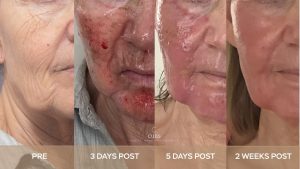
Downtime after fully ablative CO2 & Erbium
Preparing for downtime — including skincare, sun protection, and scheduling around commitments — is an important part of planning for CO2 laser treatment. Our Brisbane team will walk you through everything before your procedure.
Safety and Skin Tone Considerations
Both Fraxel and CO2 laser treatments have established safety profiles when performed by appropriately trained clinicians using quality equipment. However, as with all cosmetic procedures, there are risks and these vary between individuals. Skin tone is an important factor when selecting a laser treatment.
Darker skin tones (Fitzpatrick IV–VI) carry a higher risk of post-inflammatory hyperpigmentation (PIH) with ablative treatments like CO2 laser. For these patients, Fraxel — particularly the Fraxel Dual — may be a more appropriate option, and this will be discussed thoroughly during your consultation.
At Cutis Clinic Brisbane, we perform thorough skin assessments and Fitzpatrick typing before recommending any laser treatment. Your safety and skin health are always the priority.
Preparing for Your Laser Treatment in Brisbane
Regardless of which laser you choose, preparation is key to getting the best results and minimising complications.
Typically recommended before treatment:
- Avoid sun exposure and use SPF 50+ daily for at least 2–4 weeks beforehand
- Discontinue retinoids (Vitamin A products) 5–7 days before treatment
- Avoid blood-thinning medications and supplements (with your doctor’s guidance)
- For CO2 laser: antiviral medication may be prescribed if you have a history of cold sores
- Complete a thorough consultation and medical history review with your clinician
Our team at Cutis Clinic Brisbane will provide you with a personalised pre-treatment protocol at your consultation.
How Much Does Fraxel vs CO2 Laser Cost in Brisbane?
Laser resurfacing is a medical-grade treatment, and pricing varies based on the area treated, severity of concerns, number of sessions recommended, and the clinic’s level of expertise and equipment.
As a general guide:
- Fraxel tends to be priced per session, with a course of treatments typically recommended. While the per-session cost is lower, the total investment across multiple sessions should be factored in.
- CO2 Laser is typically higher per session, but often requires fewer treatments — meaning the total cost across the full treatment course may be comparable, depending on individual needs.
We believe in transparent pricing and honest consultations. Book a consultation at Cutis Clinic Brisbane to receive a personalised quote based on your individual skin assessment and treatment plan.
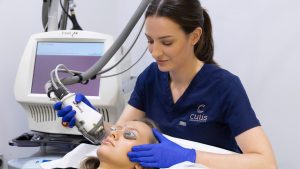
Why Choose Cutis Clinic Brisbane for Laser Skin Resurfacing?
At Cutis Clinic Brisbane, laser skin resurfacing is delivered by experienced, medically trained clinicians who understand that every patient’s skin – and every patient’s life – is different. We don’t believe in a hard sell or a one-size-fits-all approach.
What you can expect from us:
- Expert skin assessment to determine your Fitzpatrick skin type and identify the most suitable treatment
- Honest recommendations — sometimes the right answer is Fraxel, sometimes CO2, and sometimes neither
- Personalised treatment protocols including pre- and post-care guidance tailored to your skin
- Medical-grade equipment from trusted manufacturers
- Ongoing support through your recovery and beyond
Whether you’re exploring your first laser treatment or looking to upgrade your skin rejuvenation routine, we’re here to guide you every step of the way.
Ready to Discuss Which Laser May Be Right for Your Skin?
The best starting point is a thorough skin assessment with a qualified clinician. Book a consultation at Cutis Clinic Brisbane and we’ll work through your skin concerns, medical history, and goals to help guide your options.