Xanthelasmas are commonly found around the eyes. They can be a marker for high cholesterol levels. Dermatologists treat these lesions with ablative lasers, high strength TCA peels as well as heating lasers that target the deeper layers of skin.
Key Points
- Xanthelasmas are benign, non-cancerous growths
- The colour is usually a pale yellow, due to cholesterol deposits
- Erbium & CO2 lasers can markedly improve xanthelasma
- Laser surgery is performed by our dermatologists
- Laser surgery is painless, with a healing up time of 4-6 days

Xanthelasma Removal at a glance
Best outcomes: 2-3 weeks
Procedure time: 30 minutes
Duration of results: Years+
Back to work: 4-7 days
Recovery: 5-7 days
Anaesthetic: Sedation, numbing
Your specialist: Dermatologist
How much: $$
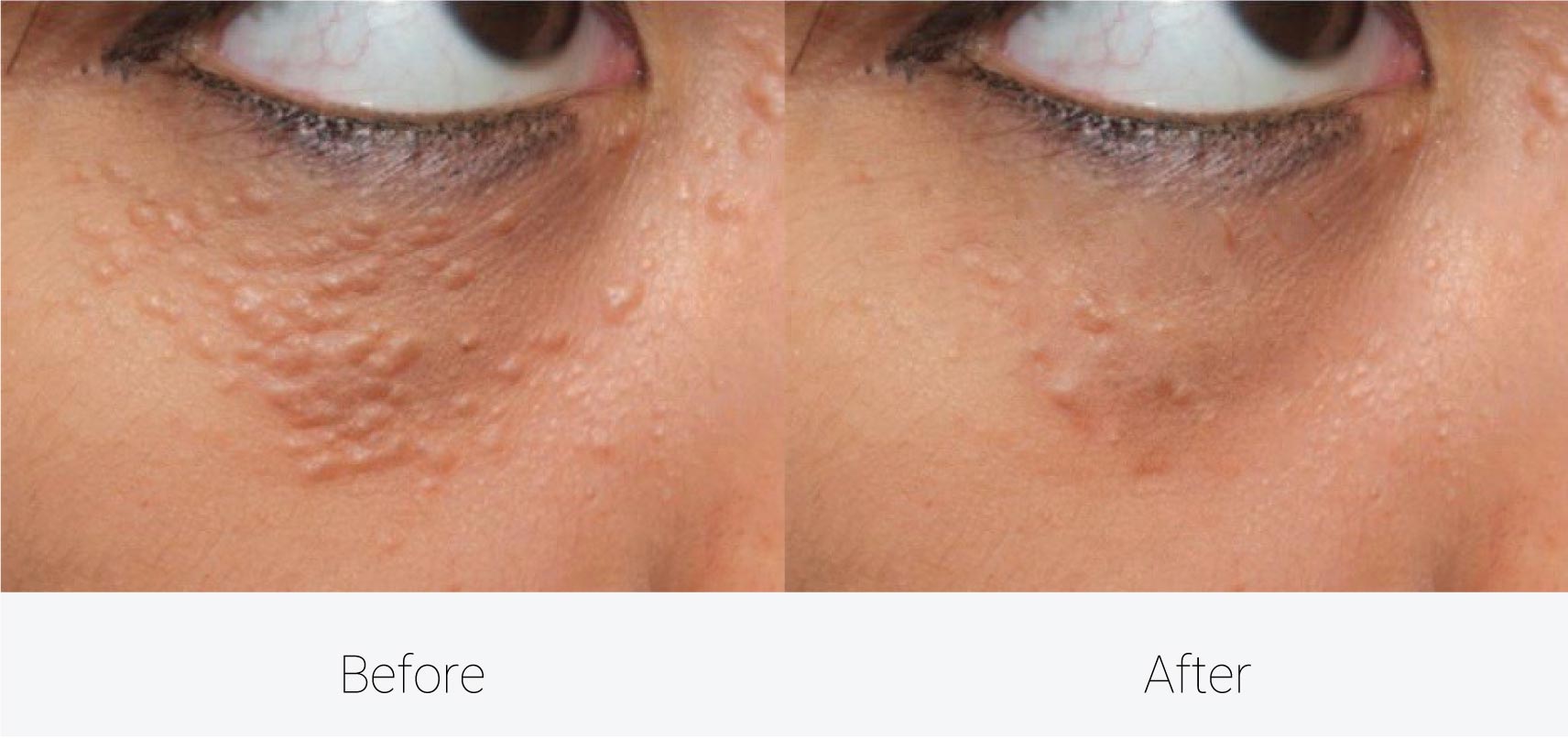
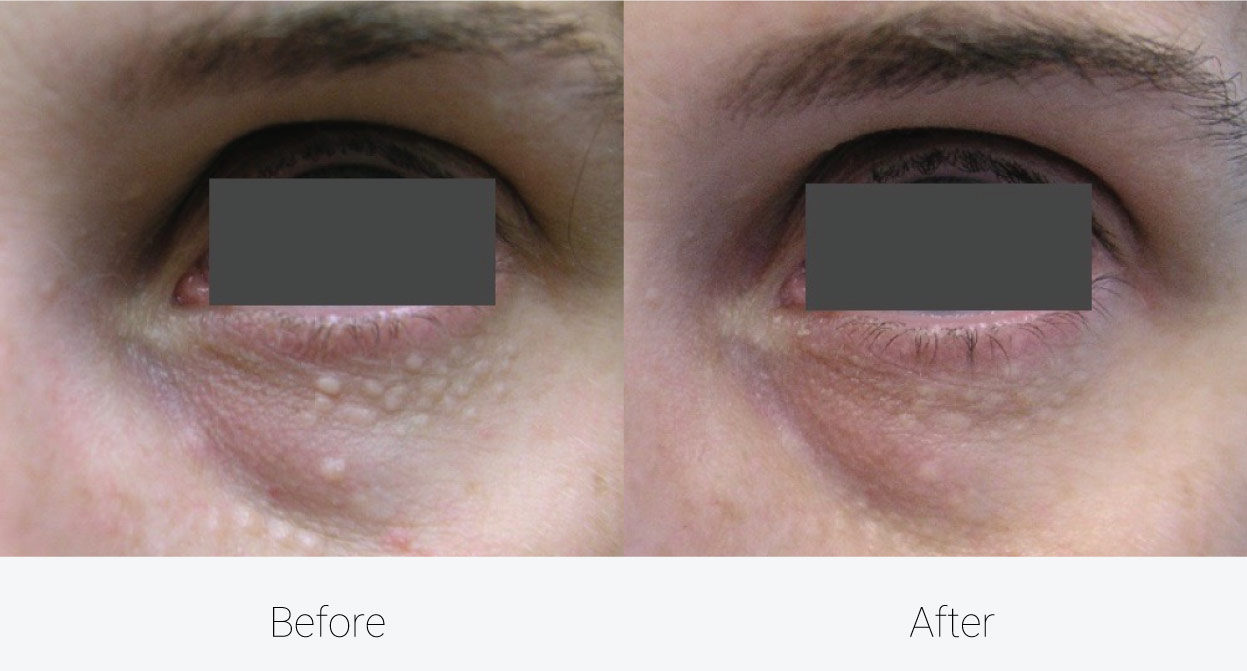
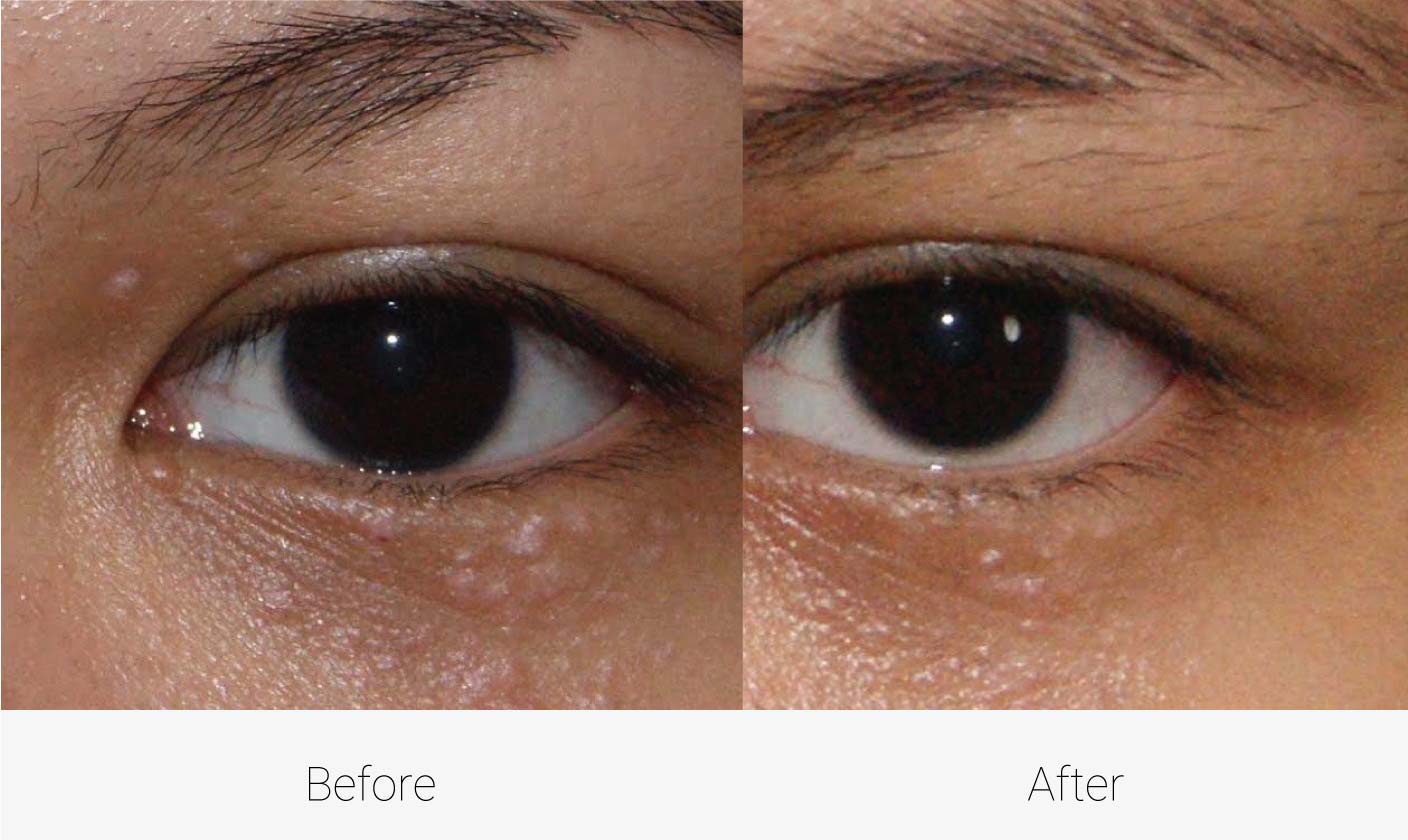
Our results speak for themselves
FAQs
What is the best treatment for xanthelasma?
Laser therapy is best. We use a combination of erbium, CO2 & in some cases long pulse NdYag lasers. The choice of laser depends on the extent of xanthelasma as well as your skin type.
How is laser surgery performed?
This procedure is performed by our dermatologists in an accredited laser theatre at Cutis Clinic, Brisbane.
- One hour prior to the procedure we apply numbing cream, followed by some mild sedation. This means you are totally relaxed during the procedure.
- Your eyes are covered to protect you from the laser.
- The procedure itself takes between 3 to 12 minutes, depending on the extent of your xanthelasmas.
Following the laser procedure, you will be given instructions as to how to look after your skin. We normally perform a check-up 1-3 days after. Your skin will be healed by day 6-7.
How many sessions will I require?
1-2 depending on the extent & your skin type.
- Laser ablation using CO2 or erbium (preferable) takes 1-2 sessions. For wide xanthelasma it takes 2 sessions, especially in darker skin types.
- Surgical excision takes 1-2 sessions depending on the extent & location of xanthelasma.
- TCA takes between 3-6 sessions, depending on concentration of TCA & your skin type.
- NdYag takes 2-3 sessions.
How long does it take to recover from xanthelasma surgery?
Skin is fully healed by day 6-7. There may be some pigmentation changes that linger for another 2-5 months, depending on your skin type.
Should I check my cholesterol levels?
Yup, it’s a good idea. Get your GP to print you out a fasting TG & cholesterol test. Up to one quarter of patients with xanthelasma will have high cholesterol.
There are rare reports of xanthelasma regressing after statin drugs. It is worth a go, as the worst that can happen is that you reduce your chances of getting a heart attack or stroke.
Will reducing my cholesterol level reduce xanthelasmas?
Highly unlikely, but it is worth a go, given high cholesterol levels can lead to strokes or heart attacks. There are a few small case reports regarding statins reducing cholesterol deposits & xanthelasmas. Discuss this with your GP prior to seeing a dermatologist.
Will xanthelasma recur?
Possibly, however most patients will have between 2-15 years of remission. Following treatment, xanthelasma may arise in new areas of eyelid skin. If, when & where is not predictable.
What are the risks of laser therapy?
Risks & side effects are fortunately rare. They include-
- Skin colour changes (hypopigmentation or hyperpigmentation)
- Scarring
- Infection
Risks are directly related to the patient’s skin colour as well as the depth & extent of treatment. Your treating dermatologist will discuss it in more detail.
Products

O Cosmedics cleansing range
$63.00-$64.00

O Biotics 3D Hyaluronic Serum
From $97.00
Our senior dermatologists perform xanthelasma treatments, including ablative laser, TCA, nano-lasers as well as excisions. They have had nearly twenty years of experience in the removal of ocular lesions.
When is surgery preferential over lasers for treating xanthelasma?
Surgery has the most predictable response as we excise xanthelasma lesions completely, even down to the muscle layer. We prefer this method if –
- Xanthelasma involves the upper eyelid.
- The area of involvement is longer than it is wider.
- If the patient has associated laxity of the eyelid skin.
When is TCA or phenol used to treat xanthelasma?
These treatments are useful for patients who would like a slow & steady approach. Chemical peels are an alternative to fast, more effective & efficient laser treatments.
The number of chemical peel sessions required to treat xanthelasma range from 3 to 8 over 6 to12 months.
Can creams remove xanthelasma?
Creams do not reliably treat xanthelasma as this lesion lies in the deep dermal, fat & muscle layers of skin- beyond the reach of topical applications.
Who performs xanthelasma removal?
Our senior dermatologists perform xanthelasma treatments, including ablative laser, TCA, nano-lasers as well as excisions. They have had nearly twenty years of experience in the removal of ocular lesions.
Ask us more about this treatment
Latest news
Insta code goes here
Insta code goes here
Insta code goes here